
What players say
Tile Matching Color Puzzle is built around a single clear task: study a finished grid, then rebuild it cell by cell. Its strengths are the lack of timers, the automatic save, and a difficulty curve that widens the palette and shrinks tile sections gradually. Players who enjoy observation and logical sequencing will get the most from it. The main limitation is that the input describes no story, characters, or competitive modes, so anyone seeking those should look elsewhere.
About this game
Reading the Grid Before You Place
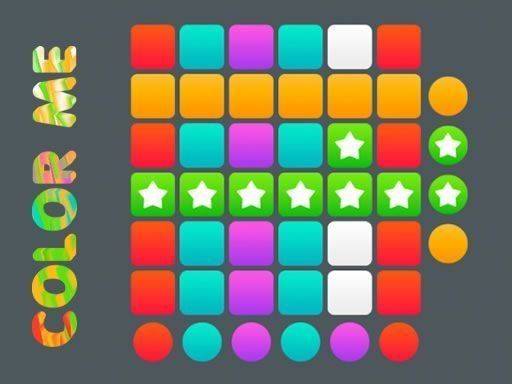
Every puzzle in Tile Matching Color Puzzle starts with a finished arrangement of colored tiles. Your job is to recreate that exact layout on an empty board by tapping or clicking individual cells. The order you fill matters: rushing can force you to undo placements, while a planned sequence keeps the board consistent with the target pattern.
How Difficulty Grows
Early grids use a small number of colors and large uniform blocks, so the target pattern is easy to read. Later puzzles introduce smaller sections and a wider palette. Some layouts rely on subtle gradients or repeating motifs that are harder to separate at a glance. The curve stays gentle, and each solved puzzle unlocks the next, so new mechanics arrive without sudden spikes in demand.
Why the Interface Stays Quiet
The workspace is deliberately minimal. Bright, saturated hues keep each tile distinct, which reduces eye strain over longer sessions. There are no timers or score counters, so nothing pressures you to place faster than you can think. A soft background and subtle grid lines preserve clarity without adding visual noise.
What Regular Play Trains
Pattern recognition sharpens as you learn to group colors and judge spatial relationships. Logical sequencing improves when you decide which cells to fill first. Observation becomes more precise because small differences in shade or position change the final result. These skills develop through the puzzles themselves rather than through drills or instructions.
Fitting Puzzles Into Your Day
Because nothing is timed, a single puzzle can be finished in a few minutes or worked through slowly over a longer sitting. Progress saves automatically, so leaving and returning later is seamless. That flexibility suits short breaks and extended relaxation equally well.
Compatibility
FAQ
Player comments
Sign in to comment
You must be logged in before posting a review or rating.
No comments yet. Be the first to comment!








Editorial Notes