
What players say
Transit Architect: Subway Planner pairs a simple drawing mechanic with resource pressure from limited trains and tunnel segments. The minimalist presentation and ambient soundtrack support a low-stress mood, but the optimization challenge deepens as maps add station types and demand. Players who enjoy connection puzzles and planning ahead will find the most value here; those seeking action or narrative should look elsewhere.
About this game
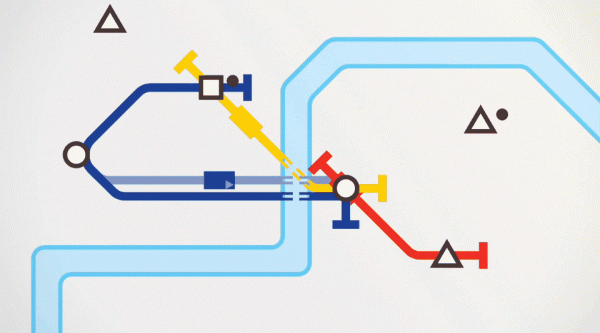
Route Drawing and Station Matching
Transit Architect: Subway Planner is built around a single recurring action: drawing lines between stations scattered across a city map. Each station carries a distinct symbol or shape, and matching stations of the same type keeps the simulated passenger flow steady. The puzzle is not about connecting everything at once but about deciding which connections matter and which can wait. As more stations appear, the challenge shifts from simple linking to optimizing the entire layout for efficiency, because a route that works early can become a liability later.
Managing Trains and Tunnel Segments
Every new station added to the map increases demand on the existing infrastructure. Players allocate limited trains and tunnel segments to prevent bottlenecks, and upgrades become available that increase capacity or open new connections. The game rewards planning ahead: a poorly managed line can lead to overcrowding and a failed attempt. Balancing expansion against resource constraints is the core tension, and it is what separates a stable network from one that collapses under its own growth.
Visual Style and Ambient Atmosphere
The presentation is deliberately minimalist. Clean lines and a muted color palette keep attention on the puzzle rather than on decoration. A calm, ambient soundtrack reinforces a stress-free environment, and the uncluttered interface makes it easy to assess the state of your network at a glance. This design philosophy keeps the experience accessible and soothing even as the puzzles become more complex, which matters when you are tracking multiple lines and station types simultaneously.
Progression and Endless Mode
Players progress through a series of maps, each with a unique layout and set of station types. An endless mode is available for those who want to continue building without a fixed goal. The variety in map configurations ensures that no two playthroughs feel identical, and the game encourages experimentation because there is often more than one way to create an efficient transit system. This structure provides a steady stream of new challenges without feeling repetitive.
Compatibility
FAQ
Player comments
Sign in to comment
You must be logged in before posting a review or rating.
No comments yet. Be the first to comment!








Editorial Notes