
What players say
Splash Paint Combat succeeds by keeping its rules minimal: hit opponents with paint, avoid being hit, and finish with the highest score. The compact arenas force constant decisions about when to attack and when to retreat, giving matches a lively pace. The family-friendly presentation and straightforward controls make it easy for newcomers, while pattern recognition and cover usage reward more dedicated players. The main limitation is that the input does not describe long-term progression or customization, so the experience may feel repetitive for those seeking deeper meta-systems.
About this game
Scoring Through Paint Marks
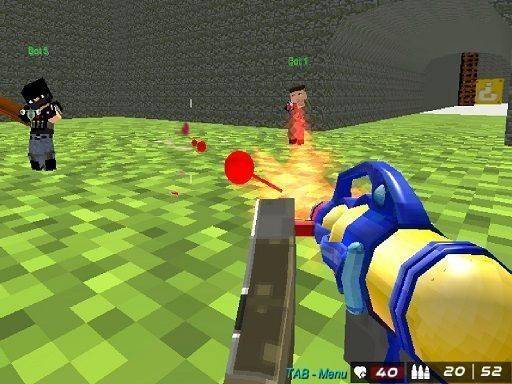
Each match in Splash Paint Combat revolves around a single objective: hit other players with paint projectiles. A successful hit adds one point to the shooter's score. When the timer runs out, the participant with the highest score wins. The arena is compact, so players cannot simply hide; they must keep moving and find angles to land shots while avoiding incoming paint.
Offense vs. Evasion
The central tension comes from deciding when to push forward and when to retreat. Pressing an attack exposes a player to counter-fire, while hanging back limits scoring opportunities. This back-and-forth gives each round a dynamic rhythm. Success depends more on reading the moment than on executing complicated button sequences, which keeps the game approachable.
Multiplayer and Single-Player Options
Splash Paint Combat offers two primary ways to play. Multiplayer mode connects users with opponents from around the world for live, unpredictable matches. This mode tests adaptability because different players bring different strategies and play styles. For a more controlled environment, single-player mode pits the user against AI-controlled bots. This option is ideal for learning the mechanics or practicing aim without the pressure of a live audience. Both modes use the same core rules, so skills transfer between them.
Visual Style and Accessibility
The game presents a bright, cheerful aesthetic. Arenas are filled with vibrant colors and simple shapes, and the screen becomes a canvas of splashes and streaks. This visual approach reinforces the family-friendly nature. Controls are straightforward: players use a mouse or touch input to aim and a simple action to fire paint, while movement uses standard directional controls. The simplicity allows new players to start almost immediately, and the responsive controls mean that success depends more on strategy and timing than on complex button combinations.
Strategic Depth and Skill Ceiling
While the basics are easy to learn, there is room for strategic thinking. Using the arena's layout for cover can help players avoid incoming paint. Learning opponent movement patterns in multiplayer allows for better prediction. In single-player mode, the AI presents consistent patterns that players can study. Mastering these elements separates casual participants from those who consistently top the leaderboard. The game rewards patience and observation as much as quick reflexes.
Compatibility
FAQ
Player comments
Sign in to comment
You must be logged in before posting a review or rating.
No comments yet. Be the first to comment!






Editorial Notes